🎉 Get your first AI Vedic birth chart analysis free today only!


Latest Updates
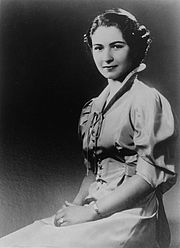
Update at: Apr 1, 2026King Farouk I of Egypt (born Wednesday, February 11, 1920, Cairo)
King Farouk I of Egypt and Sudan reigned as monarch from 1936 to 1952. Born in Cairo on February 11, 1920, to King Fuad I and Queen Nazli, he ascended the throne in 1936 at about 16 years old. His reign spanned the late colonial era and early post‑colonial period, ending with the 1952 Revolution that established Egypt as a republic.
Birth and early life
Farouk was born in Cairo to Fuad I (King of Egypt and Sudan) and Queen Nazli Sabri. He grew up in the royal court and received education befitting a modern monarch of the era, with influences from British and Egyptian advisers shaping his upbringing.
Reign and era
Farouk's reign saw ongoing political tension, evolving national sentiment, and attempts at balancing constitutional limits with royal prerogatives. His time on the throne coincided with World War II and a shift toward modernization, while political power often rested with prime ministers and parliamentary factions. He is a historical figure associated with a period of grand royal patronage, ceremonial duties, and public fascination with royal life.
In 1952, the Free Officers' Movement led a coup, and Farouk abdicated in favor of his infant son, Ahmed Fuad II. The monarchy was subsequently abolished, and Egypt transitioned toward republican governance.
Exile, death, and legacy
After abdication, Farouk lived in exile, mainly in Europe, including Italy. He died in Rome in 1965. His legacy is debated: some view his era as a symbol of a bygone royal order, while others emphasize the political turmoil and nationalist currents that reshaped Egypt in the mid-20th century. He remains a frequent subject of biographies, historical studies, and cultural depictions about Egypt's monarchy and modern history.
Public life, media, and social presence
There are no official current social media accounts or contemporary public activities for King Farouk, as he died in 1965. Modern information about him comes from historical archives, biographies, documentaries, and scholarly works. Any online profiles or fan pages are not official and reflect historical interest rather than ongoing public engagements.
News and recent projects
There are no recent news or projects involving King Farouk as a living public figure. In contemporary media, he appears in historical retrospectives, films, and books that examine his reign, exile, and impact on Egypt’s monarchy and national history.
Notes for researchers
For verifiable information, consult reputable histories of Egypt’s monarchy, archives of royal correspondence, and established biographies. Cross‑check dates of birth (February 11, 1920) and death (1965) with primary sources when possible. Be aware that many online profiles are secondary compilations and may vary in detail.
Vedic Planet Analysis
Astrologer Reviewedking faroukh's planet-by-planet horoscope reading. Select a planet below to read its detailed Vedic interpretation.
 1st
1stAscendant Represents AS
king faroukh birth chart analysis for Ascendant
In Vedic astrology, the natal lagna (ascendant) significantly influences an individual’s personality, physical appearance, and overall life journey. When the natal lagna is in Virgo, the person is typically analytical, detail-oriented, and methodical. Virgo is ruled by Mercury, which endows the individual with strong intellectual capabilities, a critical mind, and a preference for order and efficiency. Virgo ascendants in Chitra nakshatra, specifically, are known for their creativity and aesthetic sense. Chitra nakshatra is symbolized by a shining jewel or a bright light, indicating a person who seeks to shine brightly in their pursuits, often displaying a flair for the arts, design, or craftsmanship. This placement suggests an individual who is meticulous yet artistic, combining practicality with creativity. Now, considering Mercury, the ruling planet of Virgo, is placed in the 6th house in Aquarius and in Dhanishta nakshatra, this placement adds more layers to the interpretation. The 6th house generally represents service, health, daily work, and conflicts. When Mercury is in the 6th house, it indicates a person who is likely to excel in professions that require analytical skills, problem-solving abilities, and a meticulous approach. They may be drawn to careers in healthcare, law, or any field that involves detailed analysis and service. Aquarius, ruled by Saturn and co-ruled by Rahu, imparts a progressive and unconventional mindset. With Mercury in Aquarius, the person’s thinking is innovative, forward-looking, and often ahead of their time. They may have unique ideas and a strong inclination toward humanitarian efforts or technological advancements. Dhanishta nakshatra, symbolized by a drum, indicates rhythm, prosperity, and adaptability. This nakshatra is ruled by Mars, which adds a dynamic and energetic quality to Mercury’s placement. Therefore, individuals with Mercury in Dhanishta nakshatra are likely to be ambitious, disciplined, and capable of working persistently toward their goals. In summary, a Virgo ascendant in Chitra nakshatra with Mercury in the 6th house in Aquarius and Dhanishta nakshatra indicates an individual who is analytical, creative, and meticulous, with a strong inclination toward service-oriented professions. They possess a unique, innovative mindset and are likely to excel in fields requiring detailed analysis and problem-solving skills, driven by a disciplined and ambitious nature.
Which Raj Yogas are in King Faroukh's birth chart?
4 FOUNDKing Faroukh's chart shows 2 Raj Yogas and 2 challenging combinations, including Gaja Kesari Yoga, Chandra-Mangala Yoga.
Which dasha is King Faroukh running now?
VIMSHOTTARIKing Faroukh is currently in the Rahu mahadasha, running from Aug 13, 2026 to Oct 4, 2026.
What do King Faroukh's numerology numbers say?
King Faroukh's core numbers are Destiny 8, Soul Urge 7, Personality 7, Kabbalah Number 3.
Chaldean Destiny 8 indicates executive expression and authority. It supports business, finance, leadership, and achievement through discipline.
Chaldean Soul 7 desires truth and depth. It seeks learning, solitude, spiritual growth, and refined understanding.
Chaldean Personality 7 appears thoughtful, private, and analytical. Others often see depth, intelligence, and spiritual interest.
Kabbalah Number 3 reflects an inner spiritual code of expression and creativity. It supports communication, inspiration, and joyful manifestation.